About Vallalar
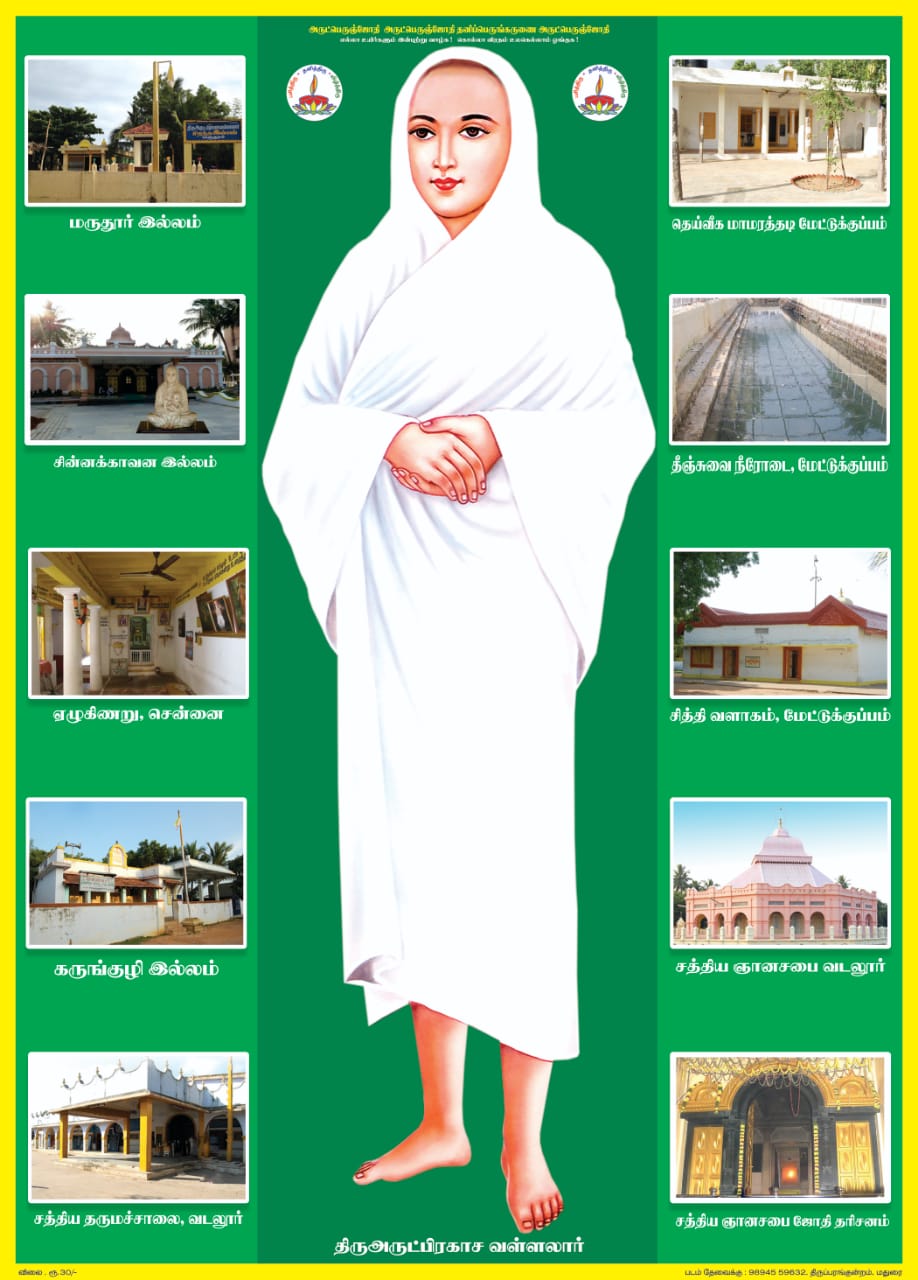
NJ Vallalar Palli (New Jersey Vallalar Tamil School) is proud to be named after one of the greatest visionaries in Tamil history—Thiruvarutprakasa Vallalar.
Vallalar Tamil School school is a place to learn our classical Tamil language; it is a community built on the pillars of Compassion, Universal Love, and Secularism. Vallalar lived a life that transcended the boundaries of caste, creed, and religion. He taught us that a healthy society must be built on the unity of all people.
The Life of Vallalar: A Messenger of Compassion
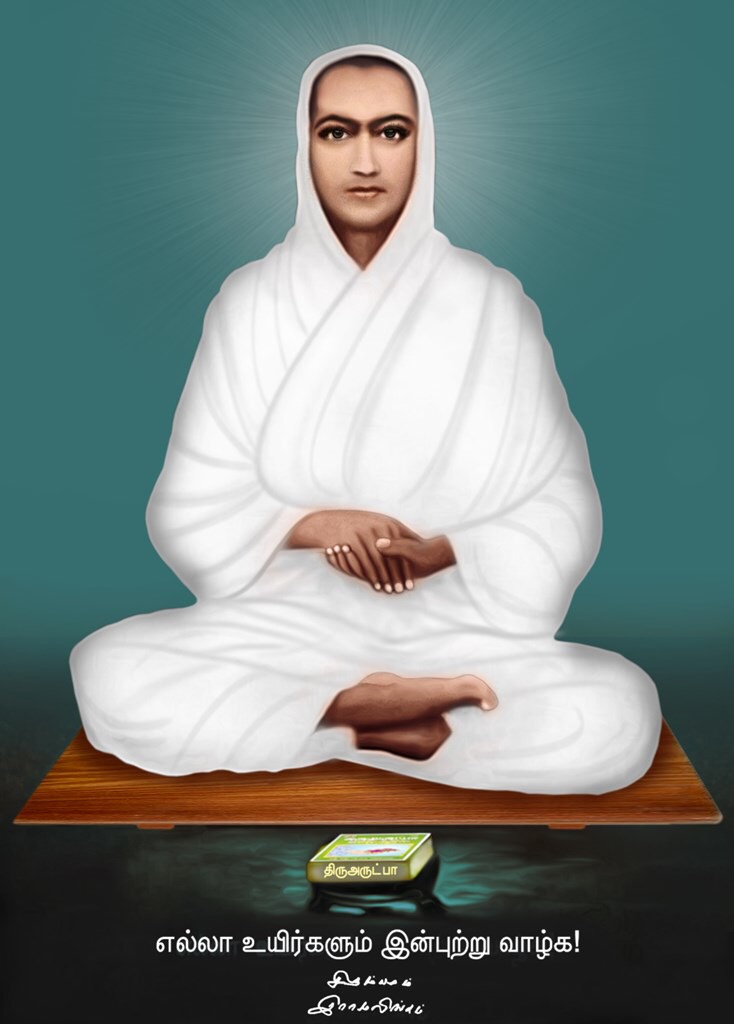
Ramalinga Adigal, affectionately known as Vallalar, was one of the most famous Tamil saints and poets of the 19th century. He was born on October 5, 1823, in a small village called Marudhur in Tamil Nadu, India. Ramalinga Adigal, is remembered today as a poet, a philosopher, and a friend to every living soul.
1. A Special Childhood
Vallalar was born on October 5, 1823, in Marudhur, a small village in Tamil Nadu. Even as a young boy, he wasn’t interested in typical school lessons. He was drawn to deep thought and spirituality.
At the age of five, legend says he looked into a mirror and saw a vision of divine light instead of his own face. This experience shaped his entire life’s mission: teaching the world that God is not a person or an image, but Arutperunjothi—a “Vast Grace-Light.”
2. Witnessing the “Great Famines” and Colonial Injustice
During Vallalar’s lifetime, Tamil Nadu was struck by several devastating famines, including the horrific “Great Famine.” While natural droughts played a part, the suffering was made much worse by the British colonial government’s policies.
Instead of keeping food in India to feed the starving population, the British authorities continued to export massive amounts of grain to other countries for profit. They also refused to lower taxes or control the rising price of food. Seeing millions of people suffer from this man-made hunger broke Vallalar’s heart. He didn’t just feel for humans; he felt the pain of every living thing. He wrote the famous lines:
“வாடிய பயிரைக் கண்ட போதெல்லாம் வாடினேன்”
(Vadiya payirai kandapothellam vaadinaen)
“Every time I saw a withered crop, I withered too.”
3. Why He is Called “Vallalar”
Because he saw people dying of hunger due to these unfair circumstances, he decided to take action where the government would not.
-
The Name: The word “Vallalar” means “The Great Giver.” He earned this title because he dedicated his life to giving food and hope to those whom society had abandoned.
-
Sathya Dharma Salai: In 1867, he established a community kitchen in Vadalur. He welcomed everyone—regardless of their caste, religion, or status—to eat for free.
-
The Eternal Flame: He lit a lamp in the kitchen that day and declared that the fire must never go out, symbolizing that no one should ever go hungry. That fire has been kept burning by volunteers for over 150 years, and the kitchen still serves free meals today!
4. Core Teachings: Jeeva Karunyam
Vallalar’s main philosophy was Jeeva Karunyam (Mercy to all living beings). He taught:
-
Universal Brotherhood: We are all one family. Caste and religion are man-made divisions that we must look past.
-
Vegetarianism: We should never harm animals. Compassion must extend to every soul that breathes.
-
Service is the Path to God: To Vallalar, feeding a hungry person was the highest form of prayer. He called this “ஆன்மநேய ஒருமைப்பாடு (AanmaNaya Orumaippadu)” (Soul-love unity).
5. His Legacy: Thiruvarutpa
Vallalar was a brilliant poet who wrote over 6,000 verses. These are collected in the Thiruvarutpa (The Song of Divine Grace). His poems are famous for their simple language and powerful message of kindness, making them perfect for students to study and recite.
6. The Light Remains
In 1874, Vallalar entered a room in Mettukuppam and told his followers that he would become one with the Divine Light. When the room was later opened, he had vanished. He taught the world that while bodies may pass away, a life lived with Jeeva Karunyam (compassion) becomes an eternal light.